Cultural value


The cultural value of Mount Huangshan’s scenic landscape first entered the Chinese imagination in the Tang Dynasty and has been held in high esteem ever since.
|
|
|
Paintings of Mount Huangshan by Zhang Daqian, one of the best-known and most prodigious Chinese artists of the twentieth century.? |
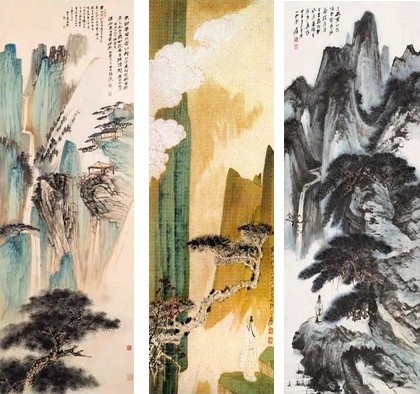
The mountain was named Huangshan (Yellow Mountain) by imperial order in the year 747 and from that time on attracted many visitors, including hermits, poets and painters, all of whom eulogized the mountain’s inspirational scenery through painting and poetry, creating a rich body of art and literature of global significance.
During the Yuan Dynasty (1271-1368), 64 temples were constructed on the mountain. In 1606, the monk Pumen came to Huangshan and built the Fahai Meditation Temple.
 |
|
A huge iron relief of Mount Huangshan's iconic Greeting Pine is exhibited in? Beijing's Great Hall of the People. |
By the Ming Dynasty (around the16th century), depictions of Mount Huangshan had become a favourite theme of Chinese landscape painters, establishing the influential Shanshui (“Mountain and Water”) school of landscape painting. Showcasing the interaction of man and nature in this highly scenic setting has inspired generations of Chinese artists and writers.
|
|
|
A poem by?Li Bai (701-762), one of the most preeminent poets? throughout Chinese history to eurogize the stunning sceneries of Mount Huangshan. |